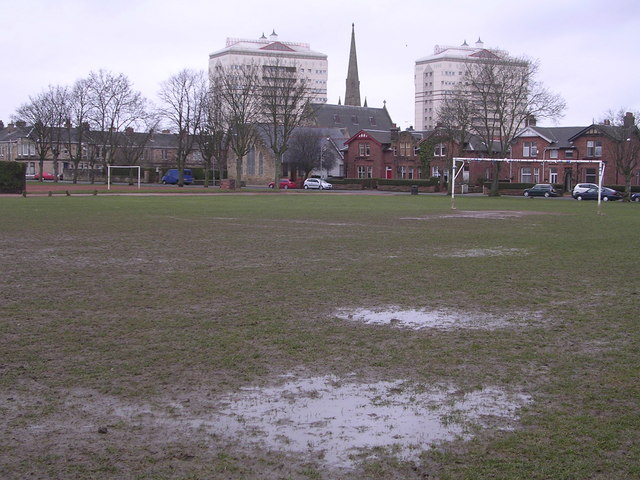
It is a cold Sunday morning, frost is forming and mist covers the grass. Two sides of the pitch are covered with parents lined in a single row, screaming encouragement to their children. The water bottles are full, yet the changing rooms are non-existent. Puddles congregate in the corners from last night’s downpour, while a group of men watch on waiting for the match to end to play their game. No stands are present or admission fees paid to watch, just children and men playing for their love of the game. Where else could you be? But your local grassroots football club.
Grassroots football is that where you pay to play through subscriptions fees; paid weekly, monthly or annually. At Wheldrake AFC, the secretary Ben Tunningley said, ‘we have to charge £35 per player per year signing on fee and £4 per player per training session in the winter due to lack of floodlights so we have to hire a 3g pitch, £5 per player per game as match fees to cover costs of referees, pitch hire, facilities hire, after game food and new kits etc.’ This shows how the money helps the club survive and cover the basic costs. As well as the upkeep of changing rooms and facilities, if you are lucky enough to have some.
Carlton Athletic FC is an amateur club, founded in 1953, which compete in the West Yorkshire Association League. Funding is a big problem for the club. A spokesperson for the club said that ‘funding comes from local sponsorship mainly’ with ‘advertising boards around the pitch that we ask £100 per annum to advertise.’ This is to combat the ‘cost of £4000 per season per team at the club.’ Reflecting the dependence they have on money coming in from outside the club.
The funding that is supposed to help clubs is given to local authorities of the 52 county football associations by the FA. However there still is a problem that local councils and services don’t do enough to support clubs. Facilities are often run down and sometimes simply in need of repainting, yet the money to do so in many cases has to be raised by the club itself. This is done by the hard work of volunteers through selling food, drinks or raffle tickets.
The cost of low level football is often overlooked and taken for granted by onlookers and sometimes even players. The fees and subscriptions paid by players are a basic cover for grassroots clubs to survive. The kits, football, bibs are the simple necessities that are needed, yet there is much more that is paid at some clubs.
The FA have taken much of the blame for the rising costs, for example the referees, fees, balls and fines all to be regularly paid, can force many clubs to fold. At Carlton Athletic FC, the benefits of more funding from the FA would help towards the ‘£2400 per annum for the kits and up keep of the pitches and worry less about not being able to pay referees every week’.
However the biggest problem at the club is not being able to self-fund and are hoping to ‘raise funds to build our own clubhouse or bar’ which would help ‘make our own money to keep the club afloat’. This project leads to the club running ‘as a business rather than handing the begging bowl out to supporters every time we are struggling to pay for something’.
The cost of training in the winter is one that passes by the mind of most outsiders thinking of what clubs have to find money for. With English weather being as it is, from around November to March it is too dark too train at night and with very few clubs having access to their own 3G pitches, they must pay to use a nearby one. That can cost up most of £100 per hour, therefore relying hugely on the turnout of players. As there may be a pay when you turn up system rather than paying in advance. This is an extra cost that puts huge strain on the finances of grassroots clubs.
Wetherby Athletic FC, founded in 1949, are another amateur club that compete in West Yorkshire Association Football League. They have a different approach to gaining funding. They use the usual higher club tactic of selling match day programmes. This is full of local business’ that have sponsored the club as well match graphics and links from the website and ‘is used as a way of driving people to the relevant business’.
Concerning the pitches during the winter period, English weather means many pitches become flooded or too frozen to play on. Pete Arnett, press officer for Wetherby Athletic FC, said ‘we have played on some truly horrendous surfaces’ and that ‘the pitches and facilities are the worse at our level’. Local services are given the blame as they don’t do enough to get the pitches back into a playable state or prevent the damage being made in the first place. Arnett believes, ‘that just £1000 from somewhere be it the FA, FIFA or the Government would mean the world to a lot of clubs to improve what they have’. Showing the desperate state many clubs are in.
Another problem with the playing surfaces are the injuries sustained when playing. Yet local councils have had their leisure and sports budgets slashed by the government meaning the effect on grassroots football and even sport in general has been hit with a negative impact.
The facilities are another factor below standard at grassroots level, with it being well known than non-league and some League 1 & 2 clubs not having sufficient funds to upgrade their changing rooms. It is clear that at amateur level the cases are going to be even worse. The impact of poor facilities at grassroots level is that participation decreases; there are players such as Jamie Vardy and Charlie Austin who have come through the leagues yet it is struggle for more to follow suit.
At Wetherby Athletic FC this has been a prominent factor having ‘lost so many players with the excuse of I can’t stand playing at this ground or that ground because of the pitch and facilities, and is a real shame as we lose many talented footballers, that may not be world beaters, but some could certainly play at a higher level’. Demonstrating the clear problem of what more funding could do to keep those more talented players in the game and keep participation levels from dropping like they are.
Not only is it top players that are being missed out on, but also coaches. The system of progressing coaches through the grassroots system and into the semi-professional or higher is lacking any support. A basic idea of getting coaches to get their qualifications and aspire to drive up the leagues isn’t often pushed by the FA, and shows in the lack of new young English managers coming into the football league.
Ben Tunningley, secretary of Wheldrake AFC who play in the York Minster Engineering League, added that, ‘ the number of qualified coaches in England is very low and getting high level and good quality coaches to helps out at low level clubs would increase interest and potentially spark more people to want to become coaches.’
FA has increased its investment into helping grassroots football in recent years despite continued criticism. They now spend £50million a year of its income on grassroots football. From the £5.14bn received from television rights deals, the 20 Premier League clubs will contribute a combined £56million per season from 2016-19 into lower level football and community projects.
The football foundation has done their part to combat the dire straits some amateur clubs are in; since 2000 they have given out £400m in grants towards grassroots sports projects, which has attracted a further £600m in partnership funding. Last year they gave out 712 grants worth £18m, showing some investment is being done. Additionally the foundation spent £29million on 44 3G pitches, 49 changing pavilions and 46 properly drained pitches.
This still isn’t enough for grassroots football clubs. Top flight clubs receive an enormous amount of money and the £56million contributed isn’t a representative percentage of what funding grassroots footballs is in need of. Taking into account the £8bn that the Premier League will receive from the sale of international TV rights over the next three seasons, doesn’t really do justice to the investment that is put back into the national game at amateur level.
Despite the huge amount of funding that is given by the various organisations in England it is not a fair representation of the billions of pounds that the Premier League and the FA receive from the TV deals. The constant voice of grassroots football is that the higher beings of the game should simply come down and visit the clubs that have a lack of good playing surfaces and non-existence or poor facilities. To see for themselves that grassroots football is in desperate need of further investment.

 Reuben Young